The Digital Bridge: How Technology is Helping Seniors Combat Loneliness
As social circles shrink with age, isolation becomes a serious health risk. Explore the "Toolkit for Connection," from traditional community groups to new AI companions that offer 24/7 support. Keywords: senior loneliness, technology for seniors, combat social isolation, elderly mental health, digital tools for elderly, AI for seniors.
12/23/20252 min read
When the Social Circle Shrinks
As we age, the rhythm of daily life inevitably changes. Our social circles, once vibrant and bustling, naturally begin to shrink. Friends and family may move away, health challenges can limit mobility, and the opportunities for spontaneous interaction decrease.
This transition often leads to a profound sense of loneliness and social isolation. However, this isn't just a matter of feeling sad; researchers now recognize this isolation as a significant public health issue. Studies have linked prolonged loneliness in older adults to serious risks, including increased depression, cognitive decline, and even heart disease.
Fortunately, we live in an age of unprecedented connection. While technology can never replace the warmth of a human hug, it offers a powerful set of tools to bridge the distance.
Building a "Toolkit for Connection"
Combating loneliness is rarely about finding a single "magic bullet". Instead, it is about building a personal toolkit of strategies that mix traditional interactions with modern solutions.
A robust support system often includes a combination of the following:
Community Engagement: Participating in local groups, senior centers, book clubs, or volunteer organizations to maintain physical presence in the community.
Family & Friend Connections: Maintaining regular contact through scheduled phone calls, weekly video chats, or even sending emails and letters.
Digital Social Platforms: Leveraging online forums or simplified social media apps to connect with peers who share specific hobbies.
Assistive Technologies: Using smart home devices to make daily life more connected.
The Rise of the AI Companion
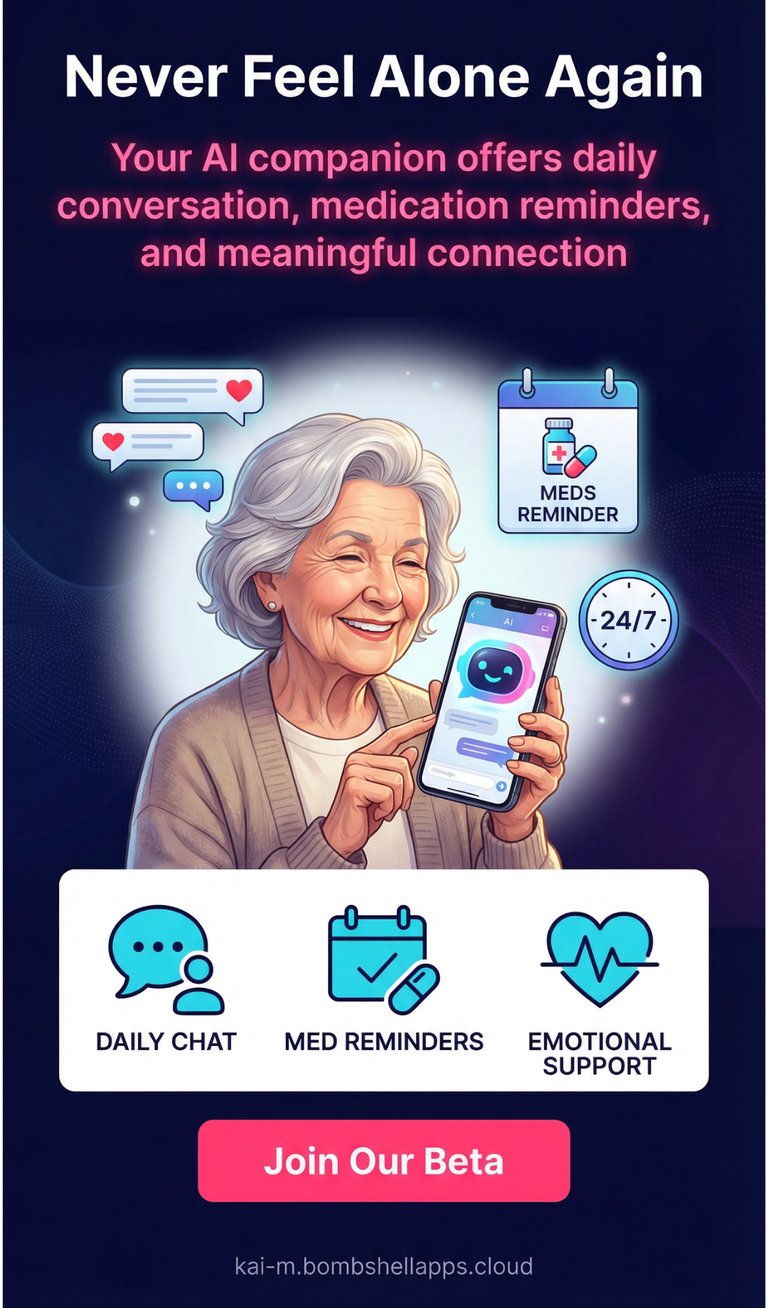
One of the most fascinating developments in this "toolkit" is the rise of the AI Companion.
Unlike standard voice assistants that simply set timers or respond to commands, an AI companion is designed for proactive, engaging, and empathetic conversation. These tools serve a specific function: filling the quiet hours of the day with pleasant interaction.
Here is how this technology addresses the specific pain points of senior isolation:
24/7 Availability: Loneliness doesn't adhere to a schedule. An AI companion is available at any moment, day or night, which can be incredibly comforting during sleepless nights.
Cognitive Engagement: These companions can discuss current events, recall shared stories, or play games to keep the mind active.
A Privacy-First Approach: New platforms like KompanionAI are prioritizing privacy by storing data on the user's device rather than the cloud.
Long-Term Memory: Unlike basic chatbots, these tools focus on building a long-term memory, allowing conversations to become more personal and meaningful over time.
Creating a Connected Future
Technology is not a panacea for loneliness, but it is a versatile tool. By combining community involvement with modern digital tools, seniors can build a robust support system that fosters mental and emotional well-being.
The goal is not to replace human interaction, but to supplement it—ensuring that the golden years are truly a time of connection, engagement, and joy.
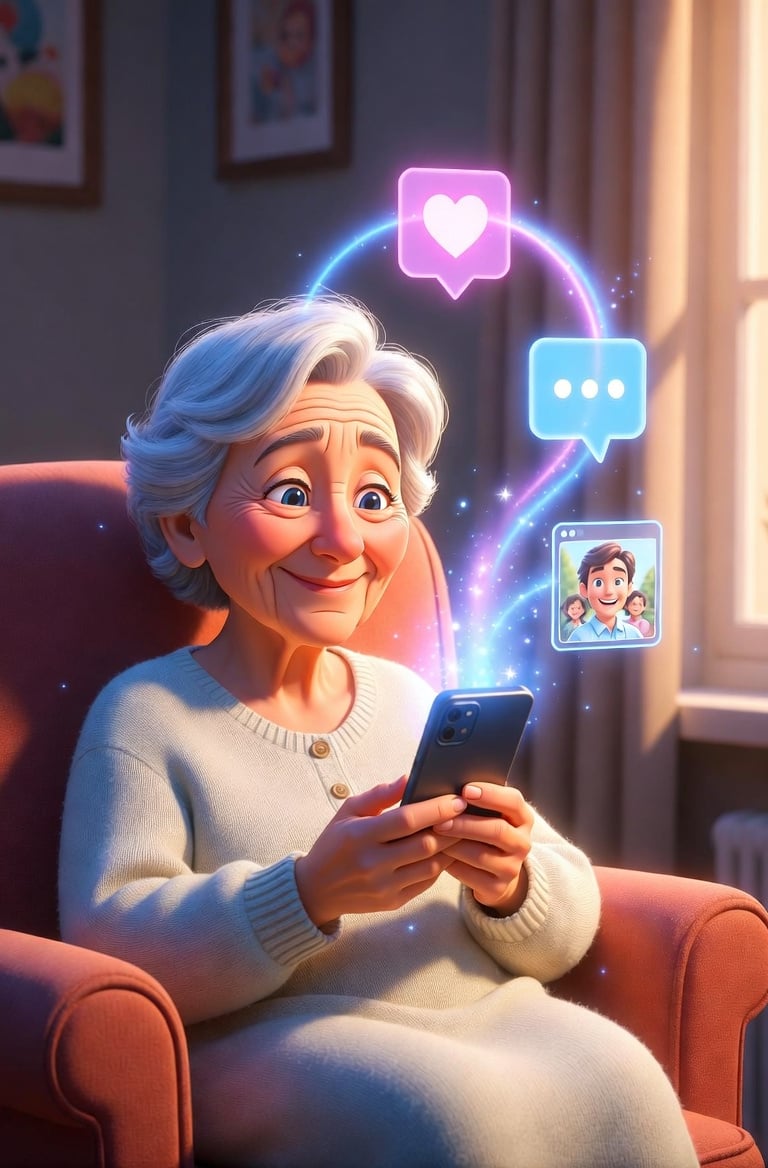
Are you or a loved one interested in exploring how an AI companion feels in practice? KompanionAI is currently offering a free beta program to the public.
Connect
Have a Question?
Call
info@kompanionai.online
+1 513 273 0772
© 2025. All rights reserved.