The Art of Being Alone: Cultivating Connection and Well-being in a Solo Household
Explore the rise of solo living and discover practical strategies for cultivating connection, managing loneliness, and thriving in your own space. From community engagement to digital tools.
12/24/20252 min read
Redefining Connection in a Solo World
Connection is not just about physical proximity; it's about a sense of belonging and being understood. For those living alone, this often means curating a diverse "social portfolio."
For a growing number of people, living alone is a conscious choice—a path to independence, self-discovery, and unparalleled freedom. For others, it's a circumstance born of life changes.
Whatever the reason, the rise of the single-person household is one of the most significant social trends of the past half-century [1].
Living alone can be incredibly empowering, but it also requires a more intentional approach to building and maintaining a sense of connection. The quiet moments that are blissful on one day can feel like profound loneliness on another. The key to thriving while living alone is to master the art of solitude without succumbing to isolation.
Strategies for Building Connection
Connection StrategyDescriptionActionable IdeasCultivate "Third Places"Find locations outside of home and work where you feel a sense of community.Become a regular at a local coffee shop, join a gym or yoga studio, or find a favorite park bench.Schedule Social RitualsCreate recurring, low-effort social events.A weekly video call with family, a standing monthly dinner with friends, or a Saturday morning walking group.Embrace Weak TiesNurture casual acquaintanceships.Chat with your barista, get to know your neighbors, or interact with others in hobby groups. These low-stakes interactions build a sense of community.Leverage Technology MindfullyUse digital tools to supplement, not replace, real-world connection.Schedule video calls, join interest-based online groups, or use apps to coordinate in-person meetups.
The Role of Technology as a "Social Snack"
While deep, meaningful relationships are the cornerstone of our social well-being, researchers also talk about the importance of "social snacks"—brief, positive interactions that can lift our spirits throughout the day [2]. This is where technology can be particularly effective.
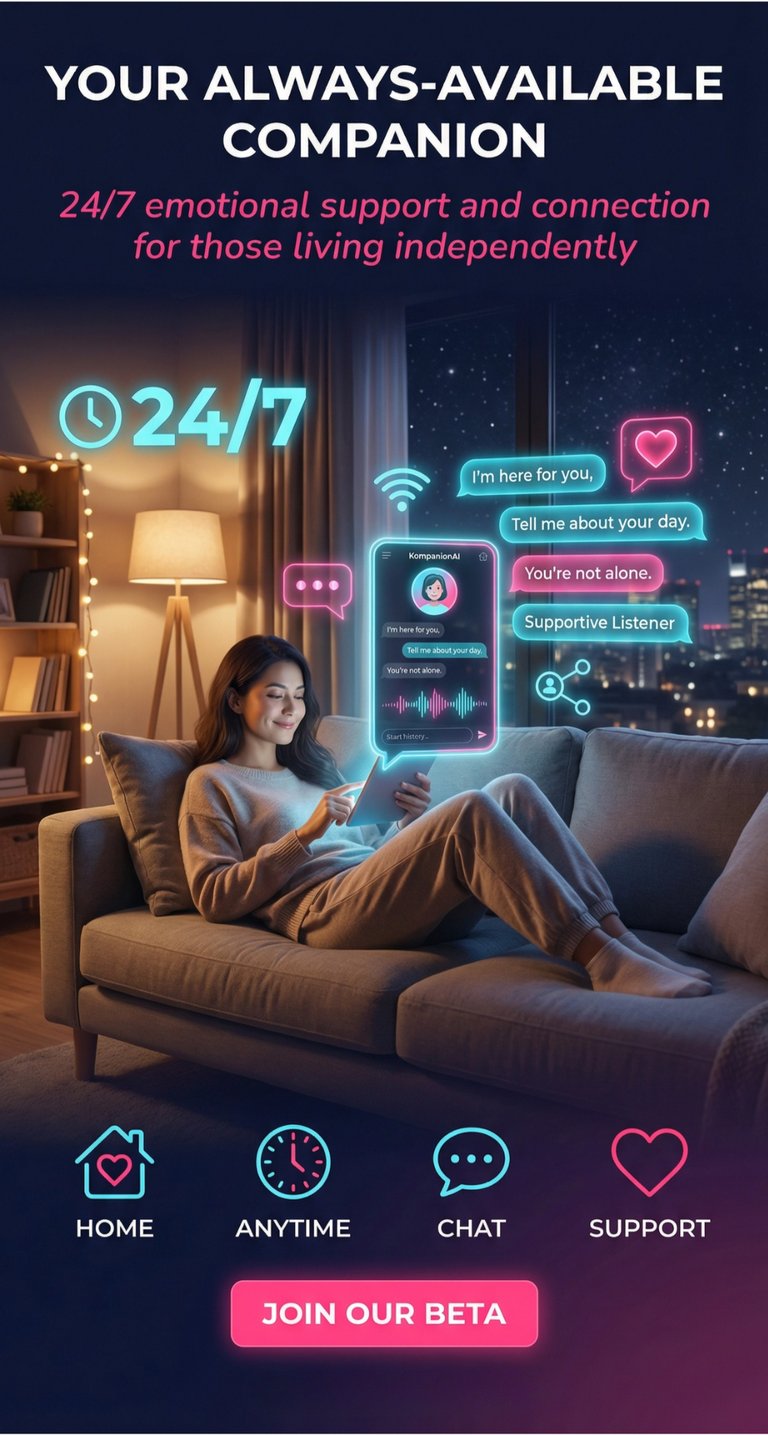
One of the most innovative tools in this space is the AI companion. These are not just passive assistants; they are designed to be conversational partners that can help fill the silence and provide a sense of presence in an empty home.
An AI companion can:
Serve as a sounding board for ideas or a way to talk through a problem.
Engage in conversations about shared interests, like movies, books, or news.
Provide a consistent and reliable "good morning" and "good night," which can be surprisingly comforting.
The Next Generation of Companions
As this technology evolves, platforms are becoming more sophisticated. For example, the KompanionAI project is developing a companion with long-term memory, allowing it to recall past conversations and build a more personalized rapport.
For those living alone, this can feel like having a digital roommate who remembers your stories and preferences. The emphasis on local data storage also means your private musings remain private.
Try the Beta: For anyone curious about this emerging tech, a free beta is available at kaim.bombshellapps.cloud.
The Ultimate Goal: Contented Solitude
Living alone successfully is a balancing act. It's about cherishing the peace and freedom of your own space while actively building a network of connection that sustains you.
By being intentional about community, scheduling social rituals, and using technology as a tool for connection, you can master the art of being alone and build a life that is both independent and deeply fulfilling.
References
[1] Klinenberg, E. (2012). Going Solo: The Extraordinary Rise and Surprising Appeal of Living Alone. Penguin Books.
[2] Sandstrom, G. M., & Dunn, E. W. (2014). Social Interactions and Well-Being: The Surprising Power of Weak Ties. Personality and Social Psychology Bulletin, 40(7), 910-922.
Connect
Have a Question?
Call
info@kompanionai.online
+1 513 273 0772
© 2025. All rights reserved.