Daily Mental Wellness: Tools & Strategies for In-Between Therapy Sessions
Learn how to support your mental health journey between therapy sessions with practical tools like mood journaling, mindfulness apps, and AI-powered platforms for self-reflection.
12/25/20252 min read
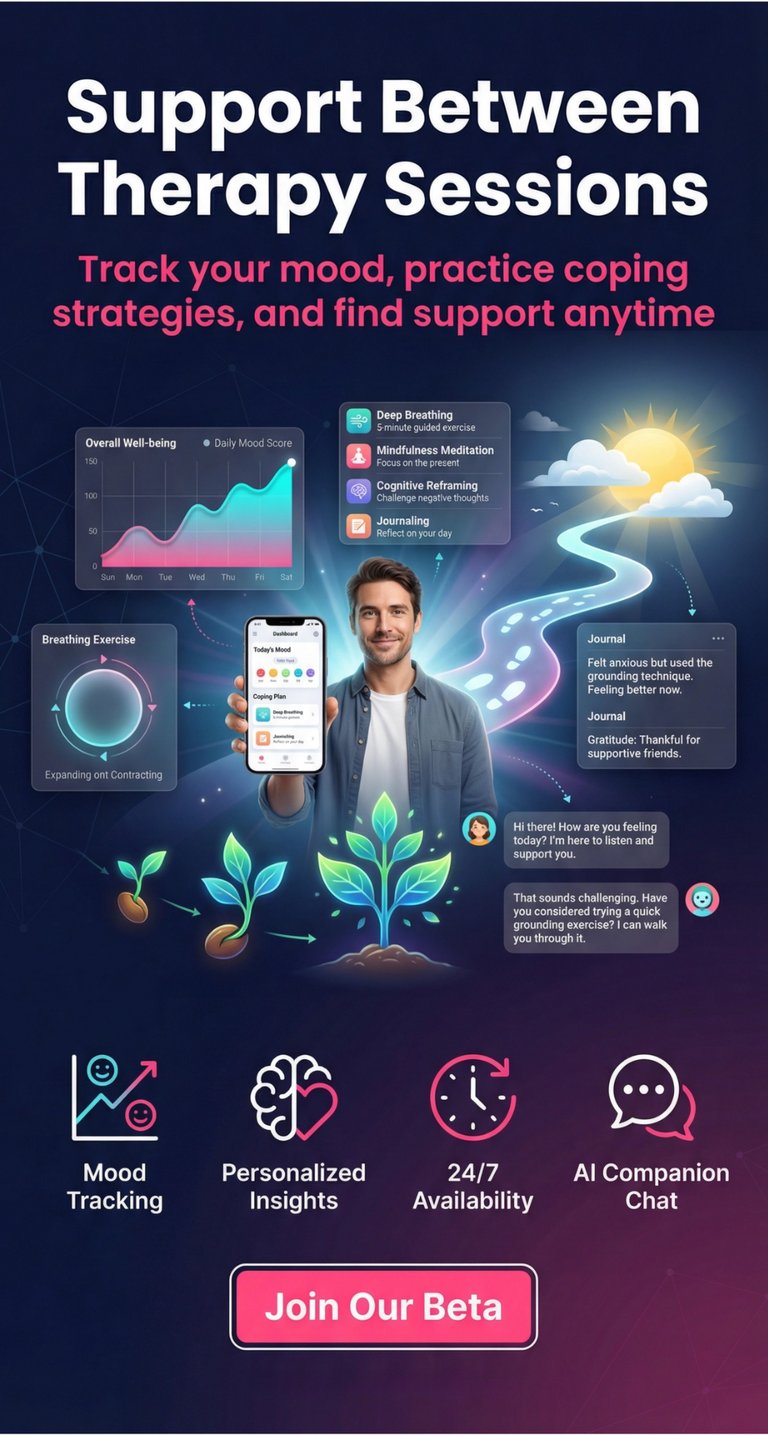

Beyond the Therapist's Office: Building a Daily Practice for Mental Wellness
Therapy is a powerful and often life-changing tool for navigating the complexities of mental health. It provides a dedicated space for professional guidance, deep reflection, and structured healing.
But the work of mental wellness doesn't stop when you leave the therapist's office. The hours and days between sessions are where the real practice happens—where we apply the insights we've learned and build the daily habits that foster long-term resilience.
Creating a personal "mental wellness toolkit" can transform the time between sessions from a passive waiting period into an active, empowering part of your journey. This article explores practical tools and strategies you can use to support your mental health on a daily basis.
Core Practices for Daily Mental Maintenance
Think of these practices as the foundational pillars of your mental wellness routine. They are simple, evidence-based, and can be adapted to fit your lifestyle.
Daily PracticeDescriptionWhy It WorksMood JournalingBriefly noting your emotional state, the situations you're in, and your thoughts.It builds self-awareness, helps you and your therapist identify patterns and triggers, and provides a tangible record of your progress [1].Mindfulness & MeditationEngaging in short, guided exercises to ground yourself in the present moment.It can reduce rumination, lower stress levels, and improve your ability to respond to challenging emotions rather than reacting to them.Cognitive ReframingActively challenging and changing negative or unhelpful thought patterns identified in therapy.This is the core of Cognitive Behavioral Therapy (CBT) and helps rewire your brain for more positive and realistic thinking.Scheduled "Worry Time"Designating a specific, limited time each day to consciously think about your anxieties.This practice can prevent worries from consuming your entire day by containing them within a defined period.
The Role of Technology in Your Wellness Toolkit
Technology has created a wealth of resources to support these daily practices. There are hundreds of apps dedicated to guided meditation, mood tracking, and CBT exercises. These tools can provide structure, reminders, and a sense of accountability.
An emerging category within this space is the AI companion. These platforms are evolving beyond simple chatbots into sophisticated tools for self-reflection. An AI companion can serve as a private, non-judgmental space to:
Externalize Your Thoughts: Simply articulating your feelings in writing can provide immense clarity. An AI offers a space to do this without feeling like you are "burdening" a friend.
Practice Therapeutic Techniques: You can use the conversational interface to practice the reframing techniques you're learning in therapy.
Maintain a Consistent Record: A conversational journal can feel more natural than a structured app. The AI can remember your past entries, helping you see connections over time.
Privacy First
When considering such a tool, privacy is paramount. It's essential to choose platforms that prioritize user confidentiality.
The KompanionAI project, for example, is building its platform with a "privacy-first" architecture, where all data is stored locally on the user's device. This ensures that your personal reflections remain completely private.
Try the Beta: For those interested in how an AI can be integrated into a mental wellness routine, a free beta is available to explore at kai-m.bombshellapps.cloud.
A Bridge, Not a Replacement
It is crucial to view these tools as a supplement to, not a replacement for, professional therapy. They are the daily exercises that strengthen the "muscles" you are building in your sessions with a qualified therapist.
By creating a robust daily practice, you empower yourself to take an active role in your mental health journey, making the time between sessions just as valuable as the time within them.
References
[1] Baikie, K. A., & Wilhelm, K. (2005). Emotional and physical health benefits of expressive writing. The British Journal of Psychiatry, 187(4), 338-346.
Connect
Have a Question?
Call
info@kompanionai.online
+1 513 273 0772
© 2025. All rights reserved.